Computer Terminal Corporation 2200 Type 1
1971 · home computer
Specifications
| Manufacturer | Computer |
|---|---|
| Release year | 1971 |
| Type | HOME COMPUTER |
| CPU | Custom Chip - 1.2 Mhz |
| Memory (RAM) | 2K-4K-6K-8K RAM (1-4 memory boards, 2K each). |
| Graphics | None |
| Operating System | Datapoint CTOS (Cassette Tape Operating System), Datapoint DOS 1.0-1.2, and later ran DOS.A, DOS.B, and/or DOS.C |
| Others port | 50-pin I/O bus |
| Serial port | RS-232 |
| Sound | Beeper |
| Storage memory | Tape 150Kb per side, 350 cps x 2 |
| Text (Cols x Rows) | 80 x 12 |
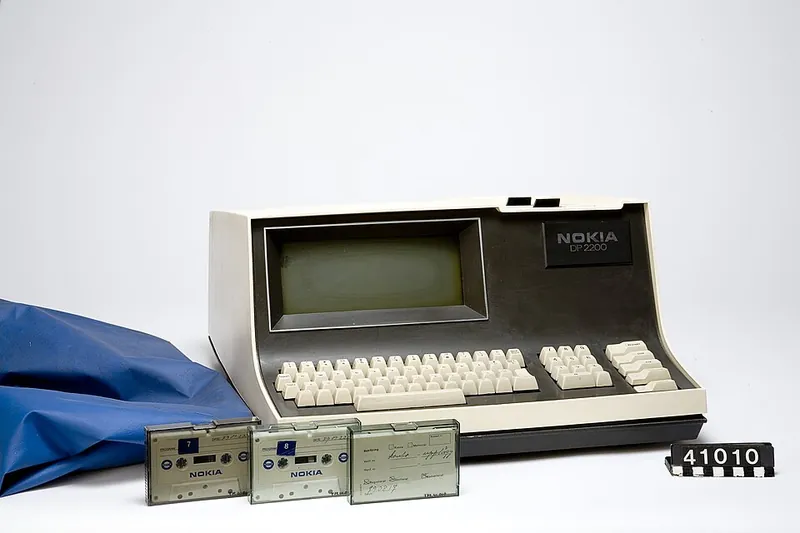
About the Computer Terminal Corporation 2200 Type 1
The Version 1 2200 was all implemented in 74xx series logic. There was no ALU (74181) at the time so the ALU was all implemented with logic gates. It ran at 1.2MHz. The 2200 went through a Type 1 and a Type 2 (both produced for a time), the Type 1 was no longer produced in 1974 and the Type 2 probably wasn't produced much past about 1978 or so (when the company's ARC System became very compelling), from that point forward the 5500 and 6600 processors were much more popular (as were some of the workstation processors). The 2200 Type 1 was 2K-4K-6K-8K RAM (1-4 memory boards, 2K each). The 2200 ran either Datapoint CTOS (Cassette Tape Operating System) or Datapoint DOS 1.0-1.2, and later ran DOS.A, DOS.B, and/or DOS.C (determined by type and size of the hard disk drive in use). It was also capable of running "load and go" applications without underlying cassette OS support. The machine did have sound, with both processor (hardware) "Beep" and "Click" instructions. By changing the rate of executing "click" instructions you could produce different frequencies. The digital cassette tapes could hold about 150K bytes each (per side) and normal read speed was about 350 cps (sounds slow today, but was much faster and more functional than the punched paper tape which was the widely used alternative at the time). The serial port(s), parallel port(s), etc were provided by external I/O interface. The actual I/O for the 2200 was by a single 50-pin I/O bus, essentially the CPU's processor data and I/O bus. Multiple I/O interfaces could be daisy-chained. Although the ARCnet LAN interface would attach to a 2200 I/O bus (of course) the ARCnet LAN interface software provided publicly by Datapoint all expected a 5500 or better processor. A 16K Type 2 2200 processor in 1972-1973 sold for a little over $14,000. A Diablo 2.5Mb 2315-type removable cartridge disk drive and controller (mounted in a desk) cost about $9800. Note that the 2200 was one of the first widely available small business computer systems to use a switching regulator type power supply (which was key to achieving the system size and weight). At the time, most everybody else used big heavy transformers and large electrolytic capacitors. The Intel 8008 was originally developed by Intel as a custom chip for Datapoint (Intel didn't believe there really was a significant market for a general-purpose microcomputer-on-a-chip! ... they wanted Datapoint's memory business!), and implements (almost) exactly the Datapoint 2200 instruction set. The reason Intel to this day uses LSB/MSB byte order is because the Type 1 2200 used a serial shift register memory, and that allowed propagating carries from LSB to MSB without requiring the memory recirculate around to the previous byte. It's also notable that the 2200 (and 5500 and 6600) did not use a raster scan CRT display, but instead Datapoint's patented "diddle scan" technique which permitted (in the earlier machines) using a serial shift register memory for the CRT refresh memory. The processor was clocked at 1.2MHz (on the Type 1 Datapoint 2200) which gave a typical instruction speed of 16 microseconds (more for memory-referencing instructions, since it had to wait for the memory to cycle around, for Type 1 2200 machines using serial main memories).
Find one for sale
Find the Computer Terminal Corporation 2200 Type 1 on eBay →Links to eBay are affiliate links — purchases may earn this site a small commission.